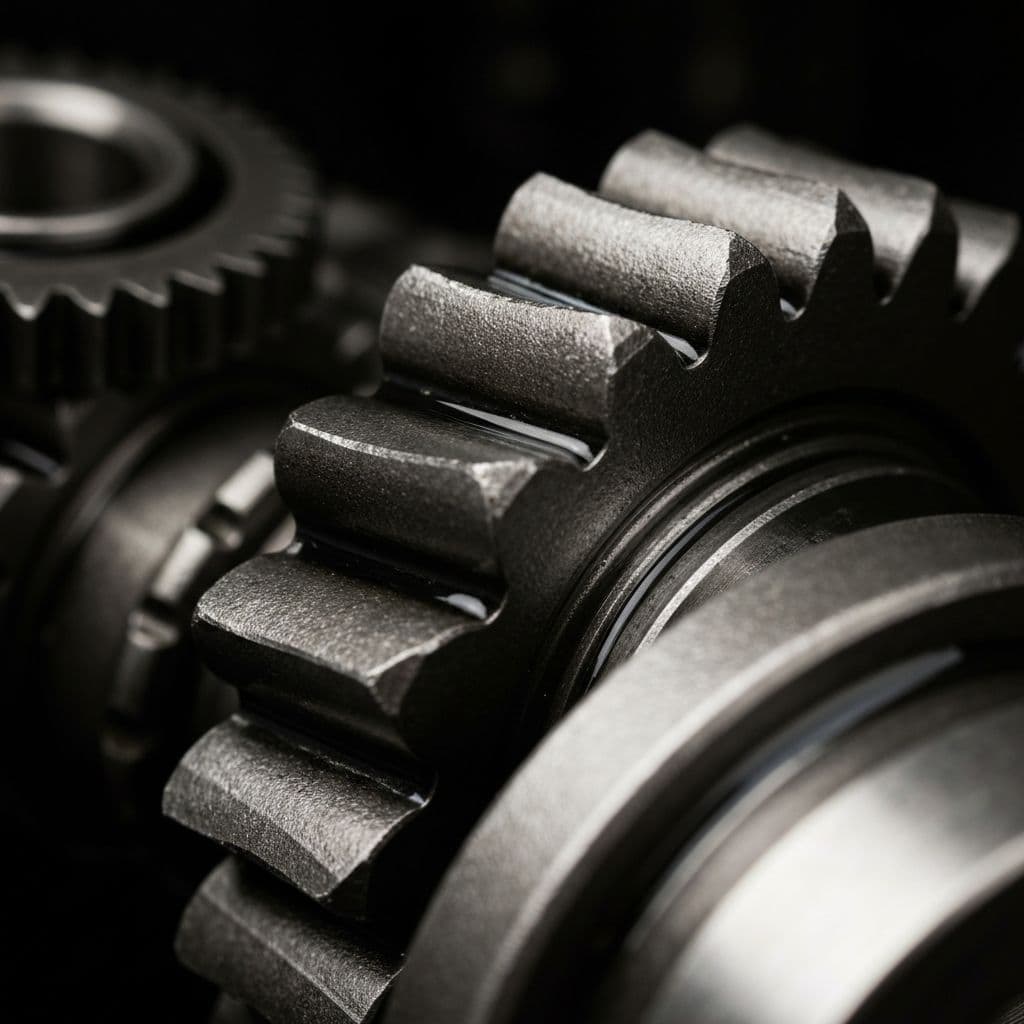
Gears operate under some of the most extreme conditions in any machine. The contact between gear teeth creates pressures exceeding 1 GPa (gigapascal) — enough to weld metal surfaces together without proper lubrication. This is where gear oil technology becomes critical.
Gear oils contain extreme pressure (EP) additives — typically sulfur-phosphorus compounds — that form protective films on metal surfaces under high loads. These films prevent metal-to-metal contact and reduce wear.
Key gear oil classifications: - GL-4: For manual transmissions and moderately loaded gears - GL-5: For hypoid gears in differentials (higher EP additive content) - MT-1: For non-synchronized manual transmissions
Viscosity grades follow the SAE J306 standard, with common grades including 75W-80, 75W-90, and 80W-90. Multi-grade gear oils provide excellent performance across a wide temperature range.
Synthetic gear oils offer significant advantages: better low-temperature flow, improved fuel efficiency, extended drain intervals, and superior protection at extreme temperatures. Our i-GlooOil GearOn and GearUp ranges cover the complete spectrum of automotive and industrial gear lubrication needs.